



Majlis Ugama Islam Singapura
Friday Sermon
9 October 2026 / 27 Rabiulakhir 1448H
Islam and Personal Well-Being
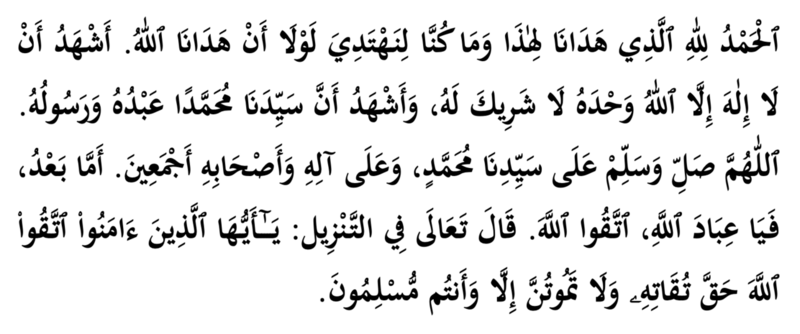
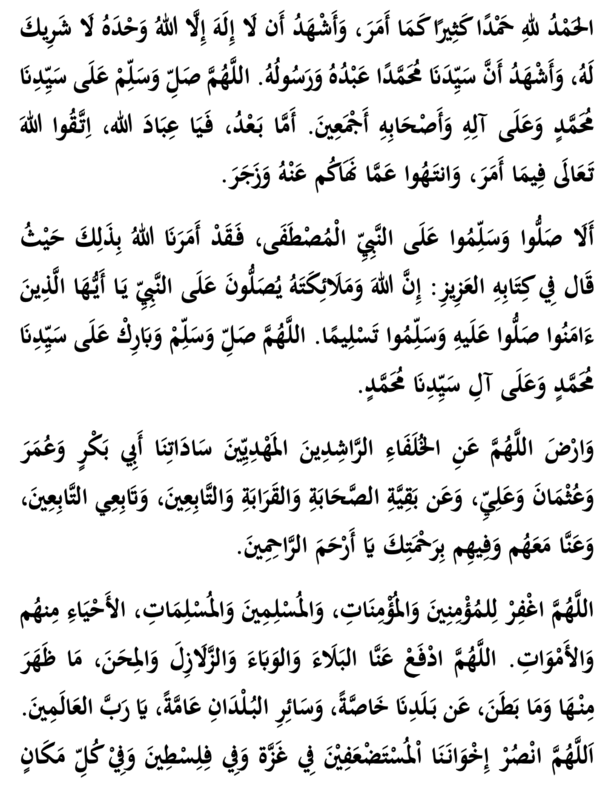
Zumratal mukminin rahimakumullah,
Let us have taqwa towards Allah s.w.t. by obeying His commands and refraining from His prohibitions. May we be among His servants who attain success in this world and the Hereafter. Amin, ya Rabbal ‘Alamin.
Dear Friday congregation,
An Arab saying goes: “One who does not possess something cannot give it to others.” A dry and empty vessel cannot pour water into another.
The same is true of our hearts, dear congregation. If our own souls are running dry, how can we offer peace, gentleness and sincere affection to those around us? The reality is that the fast pace of life often demands that we constantly appear full of energy. At times, this may force us to set aside or overlook emotional exhaustion and burnout.
Dear blessed congregation,
Emotions such as fatigue and sadness are not signs of weak faith. The Quran itself records how the Prophets experienced emotional highs and lows, from the sorrow of Prophet Muhammad s.a.w. when he was rebuked by his own people, to the apprehension felt by Prophet Musa a.s. when confronting the Pharaoh’s magicians. Consider the words of Allah s.w.t. in Surah Taha, verses 67–68:
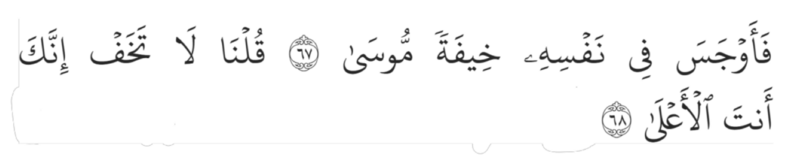
Which means: “So Moses concealed some fear within himself. We reassured him, ‘Do not fear! It is certainly you who will prevail.’”
Reflect, dear brothers. Allah s.w.t. acknowledged the fear that Prophet Musa a.s. experienced, before reassuring him in the following verse. Therefore, we should not continuously suppress or deny our feelings until our souls become drained and barren. These emotional highs and lows are part of our human nature, which Allah s.w.t. Himself acknowledges.
My dear brothers,
Islam places importance on caring for our personal well-being. Doing so is not an act of selfishness. Rather, it provides the foundation that enables us to continue caring for one another. The sermon would therefore like to suggest two steps towards caring for our own well-being and that of those around us:
First: Set boundaries that respect the rights of our bodies
Alongside the many advancements we enjoy today comes the challenge of maintaining healthy boundaries between work and rest. Information and notifications reach us wherever we may be. However, we should not allow work to encroach upon our time for rest and our personal space, to the point that we are no longer fully present with our loved ones.
Remember the reminder of Rasulullah s.a.w., which means: “Indeed, your body has a right over you, your eyes have a right over you, and your spouse has a right over you.” (Narrated by Al-Bukhari) This is what our religion asks from us in preserving our well-being.
Second: Train ourselves to be present and ready to listen
As a society that often places great emphasis on impact and outcomes, we may sometimes be too quick to offer advice or solutions. In doing so, however, we may miss the opportunity to build emotional connections that can bring about a deeper sense of comfort and reassurance.
Consider the response of Sayyidatina Khadijah r.a. when Rasulullah s.a.w. returned trembling in fear after receiving the first revelation at the Cave of Hira. She did not immediately respond by offering solutions. Instead, she was simply present and offered genuine love and care when the Prophet s.a.w. asked to be covered. This is an excellent example of how we can respond to situations involving emotional distress.
Dear blessed congregation,
Together, let us care for the well-being of our minds and bodies, beginning with ourselves and extending to those closest to us, such as our families, friends and neighbours. May Allah s.w.t. grant us tranquillity and keep us always under His protection. Amin, ya Rabbal ‘Alamin.

Sermon Second