


Majlis Ugama Islam Singapura
Friday Sermon
22 May 2026 / 5 Zulhijjah 1447H
Istita’ah in Worship
Zumratal mukminin rahimakumullah,
Let us observe taqwa towards Allah s.w.t. by fulfilling all His commands and staying away from all His prohibitions. May Allah s.w.t. bless us and our beloved pilgrims who are performing Haj with istita’ah – the capability and capacity to carry out Islam’s obligations in the best manner possible, and with accepted worship and good deeds. Amin ya Rabbal ‘Alamin.
Dear blessed congregation,
Allah s.w.t. says in Surah Al-Baqarah, verse 286:
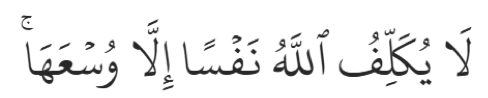
Which means: “Allah does not task a soul beyond its capability…”
Brothers, this verse is commonly associated with the context of life's trials; that Allah does not burden us with any trial except that we are capable of bearing it. This is an approach that focuses on spiritual development.
At the same time, the earlier exegetes, such as Imam Al-Qurtubi and Imam At-Tabari, held the view that this verse refers to one's capability in carrying out the acts of worship that have been prescribed. It is this capability that is referred to as istita'ah in matters of worship.
Dear brothers,
The concept of istita'ah, meaning capability or capacity, is embedded within every pillar of Islam after the two declarations of faith. For example, one is permitted to pray seated if one is unable to stand. In the act of fasting, a person who is ill is exempted from fasting. Zakat is only obligated upon those who possess the means and meet the conditions of haul and nisab.
As for Haj — it is only obligated when a person fulfils the physical, mental, financial, and administrative capabilities required.
These examples show that the pillars of Islam ease the path of worship. Is this not a depiction of Allah’s s.w.t. vast mercy?
Brothers, Allah s.w.t. reminds us of our human limitations and the vastness of His mercy in Surah an-Nisa’, verse 28:

Which means: “And Allah wants to lighten for you (your difficulties); and mankind was created weak.”
Beloved brothers,
When we are faced with difficulty in performing acts of worship due to the absence or loss of capability (istita'ah), it is important for us to keep in mind the following three reminders:
Firstly: Istita’ah is part of Allah’s decree
At any age, a person may lose physical capability, financial stability, or mental capacity at any point in time. If we are faced with this trial, let us be certain that the loss of istita'ah is also part of Allah's decree. A believer does not meet Allah's decree with dissatisfaction, but rather with patience, gratitude for the capability that was once and still is possessed, and by constantly engaging in sincere supplication.
Secondly: The lack of istita'ah does not mean the loss of opportunity to perform good deeds.
The inability to perform certain acts of worship does not mean that one cannot get close to Allah. Likewise, having capability does not necessarily mean that one is closer to Allah. For example, a person who is unable to perform the korban sacrifice due to financial constraints does not mean that the opportunity for reward is beyond their reach. It may well be that their patience, gratitude, and sincerity in other acts of worship are no less remarkable in the sight of Allah s.w.t.
Thirdly: Lack of istita’ah does not mean lack of love from Allah
Some may feel that they are less loved by Allah when they compare their own capabilities to others. Limitations in worship, such as losing the physical ability to perform Haj when one's long-awaited turn finally arrives, are sometimes associated with a sign of the withdrawal of Allah's love. Wal 'iyazu Billah.
Such an understanding is entirely inaccurate. In such situations, be certain that only Allah knows the wisdom behind it. Perhaps it occurs to purify the heart, to remind of an unnoticed heedlessness, or to prepare the soul before more doors of mercy are opened. And if we are unable to comprehend the wisdom behind it, let us be certain that Allah knows best what is good for us. All of this, in truth, is a profoundly beautiful sign of Allah's love towards us.
Blessed congregation,
In conjunction with the arrival of the Haj season, the sermon wishes to remind that the obligation of Haj is only upon those who possess istita'ah, that is, capability in terms of the physical, financial, mental, and administrative aspects.
Indeed, Haj in its essence is an invitation from Allah. If that invitation has yet to appear, let us not despair of Allah's mercy.
And let us not harbour ill assumptions of Him. Let us recall a hadith qudsi which means: "I (Allah) am as My servant thinks of Me, and I am with him when he remembers Me." (Bukhari and Muslim).
Dear brothers,
In closing, let us raise our prayers to Allah that we are always granted the opportunity and istita'ah, the capability to perform acts of worship and do good to the best of our ability. At the same time, let us also extend our prayers for the Haj pilgrims in the Holy Land, that they remain always under Allah's protection, and are kept far from any hardship or harm. Finally, let us also pray to Allah ‘Azza wa Jalla that we too are granted the istita'ah to become His guests in the Holy Land one day. Amin ya Rabbal 'Alamin.

Second Sermon