


Majlis Ugama Islam Singapura
Friday Sermon
29 May 2026 / 12 Zulhijjah 1447H
Sacrificing Self-Centredness, Strengthening Unity
Zumratal mukminin rahimakumullah,
Fear Allah s.w.t. with true piety. Obey all His commands and avoid all that He has forbidden. May Allah s.w.t. accept all acts of obedience that we offer to Him. Amin, ya Rabbal ‘Alamin.
My dear brothers in faith,
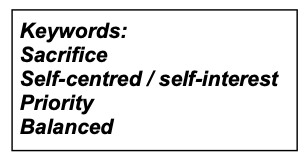
During this blessed season of Aidiladha, many Muslims perform the act of korban (sacrifice). Beyond the slaughtering of animals, there lies a deeper spirit of sacrifice – the willingness to let go of our sense of self-centredness, and to prioritise the well-being of others. This is the central message of today’s khutbah.
My dear brothers and sisters,
Reflect upon the story of Prophet Ibrahim a.s. and Prophet Ismail a.s., where we witness a profound example of sacrifice and obedience to Allah s.w.t. Prophet Ibrahim a.s. had long prayed for offspring, and his prayer was only answered when he had reached senior age. Allah s.w.t. granted him a beloved son, Prophet Ismail a.s. However, when Ismail reached an age where he could work alongside his father, a heavy command from Allah s.w.t. came. Allah s.w.t. says in Surah As-Saffat, verse 102:
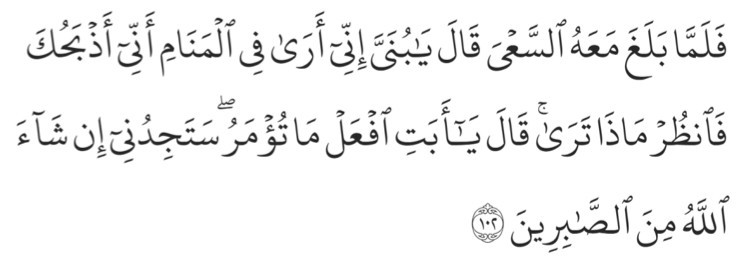
Which means: “And when he reached the age of striving with him, he said: ‘O my son, indeed I see in a dream that I am sacrificing you, so consider what you think.’ He replied: ‘O my father, do as you are commanded. If Allah wills, you will find me among those who are patient.’”
Dear brothers,
Had both Prophet Ibrahim a.s. and Prophet Ismail a.s. prioritised their self-interest, they may not have been inclined to carry out this command.
Prophet Ibrahim a.s. might have hesitated, unable to bear the thought of sacrificing a son he had long yearned for. Likewise, Prophet Ismail a.s. could have objected, being young and having a long future ahead of him.
In essence, this verse does not merely highlight their deep faith and obedience to Allah’s command. It also demonstrates their readiness to sacrifice self-interest for the sake of attaining goodness, and ultimately, the pleasure of Allah s.w.t.
Dear brothers,
This is the true spirit of Eid al-Adha that we must internalise in our daily lives. Today’s world is increasingly shaped by individualistic values. Some may become so self-centred that they are no longer attentive to the struggles of others. Perhaps, we also find ourselves more often asking, “What do I gain?” but rarely asking, “What do others need from me?”
Yet, Rasulullah s.a.w. said:

Which means: “None of you truly believes until he loves for his brother what he loves for himself.” (Al-Bukhari and Muslim)
In Surah Al-Hashr, Allah s.w.t. also praises the Ansar for their generosity and their willingness to prioritise others, even when they themselves were in need.
Beloved congregation,
To enliven this spirit of sacrifice, the sermon highlights two key lessons:
First: Learn to see from the perspective of those in need
Much of the destruction in the world today is caused by greed and self-interest. There are those who are willing to oppress others to make profit. There are those who are unwilling to give and share despite having the means to do so. There are also those who remain indifferent and unconcerned to the hardship and suffering of others.
Yet, the Prophet s.a.w. said: “A believer is not one who is full while his neighbour goes hungry beside him.” (Narrated by Abu Ya’la)
In today’s increasingly challenging economic climate, many are struggling with the cost of living, work pressures, and financial commitments. Therefore, a strong community is not built upon self-interest, but upon helping and supporting one another.
The assistance we give does not always have to be through significant means. It may be as simple as checking on someone, helping a tired family member, sharing what we have, offering a smile, or speaking kind words. Even small acts of goodness, when done sincerely, strengthen the connection between people.
Second: Islam teaches us balance
Prioritising others does not mean neglecting oneself. Allah s.w.t. says in Surah Al-Isra, verse 29, which means: “And do not let your hand be tied (like a miser) to your neck, nor stretch it forth to its utmost reach (like a spendthrift), that you become blameworthy and overwhelmed with regret.”
Islam nurtures a balanced way of life. When we achieve this balance, we are able to preserve our own well-being while also being of benefit to those around us. Our life becomes more peaceful, families more harmonious, and the community stronger in unity.
Beloved congregation,
Aidiladha reminds us that the greatest sacrifice may sometimes come by sacrificing our sense of self-centredness. Therefore, in line with the guidance of our faith, let us train ourselves to see the needs of others and to uphold balance in caring for both our own welfare and that of those around us.
May we become people who consistently spread mercy and goodness, prioritise mutual benefit, and build a community bound by compassion and unity. Amin, ya Rabbal ‘Alamin.

Second Sermon