



Majlis Ugama Islam Singapura
Friday Sermon
3 April 2026 / 14 Syawal 1447H
The Etiquette of Joy in Islam
Zumratal mukminin rahimakumullah,
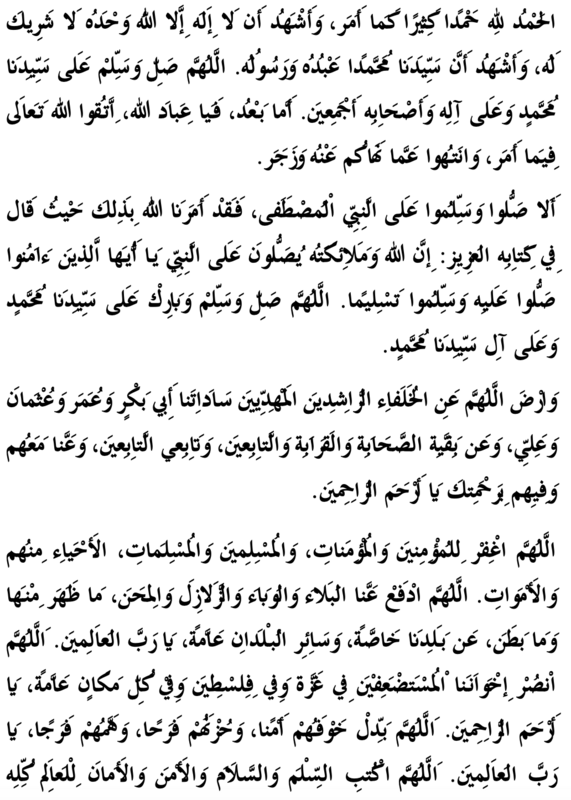
Let us have taqwa towards Allah s.w.t. with true consciousness. Obey all His commands and refrain from all that He has prohibited. Let us manifest this taqwa through our actions and our character. With this, may Allah s.w.t. grant us a good life and an even better ending in His sight. Amin, ya Rabbal ‘Alamin.
Dear blessed congregation,
Alhamdulillah, we are now in the middle of the month of Syawal. A month synonymous with victory, gratitude, and joy. It has become a tradition in our community to use this month to mend and strengthen relationships, while spreading happiness and compassion. This noble practice can be seen as a continuation of the Sunnah of Rasulullah s.a.w., who taught us to express joy during the days of celebration.
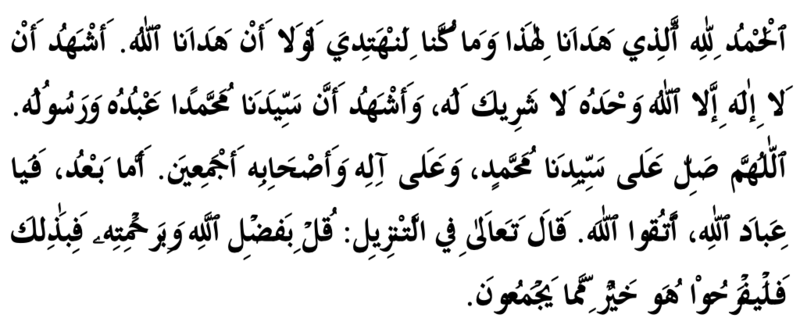
Indeed, dear brothers, happiness and joy are part of our natural disposition, and Sunnah – especially for a believer when receiving the blessings of Allah. On this basis, Allah commands us to rejoice. As mentioned in Surah Yunus, verse 58, recited earlier in the khutbah, which means:
“Say, (O Muhammad) ‘In the bounty of Allah and in His mercy – in that, let them rejoice. It is better than what they accumulate (wealth).’”
Dear brothers,
How beautiful are the teachings of Islam which encompass every aspect of life. We are encouraged to rejoice at appropriate times. Yet, even in moments of joy, there are etiquettes to be observed. The scholars have explained that happiness can be divided into three types: happiness that is praiseworthy, permissible, or blameworthy.
Happiness that is praiseworthy is the gratitude of a believer for the blessings of iman and guidance from Allah, and for the opportunity to perform acts of obedience, fulfil acts of worship, and do good deeds. A joy that brings one closer to the pleasure of Allah – that is praiseworthy joy.
Happiness that is permissible, on the other hand, is the joy one feels upon receiving blessings and ease. For example, in this season, we rejoice in being granted life and health, allowing us to visit and reconnect with our relatives. When accompanied by gratitude, this too becomes a form of praiseworthy joy.
As for happiness that is blameworthy, it is the kind of joy that leads to heedlessness. It occurs when one excessively indulges in worldly pleasures, to the point that their conduct drifts far from the pleasure of Allah. This includes celebrating in ways that transgress religious boundaries, especially during sacred Islamic months such as Ramadan and Syawal.
My dear brothers,
With this understanding, let us reflect: how do we respond when we receive blessings? Do we uphold noble conduct, or are we carried away by joy that distracts us from our purpose?
Allow me to share three religious guidelines in navigating the joyful atmosphere of Syawal:
First: Upholding moderation in joy
When we feel happy, let it be accompanied by moderation as a sign of gratitude. Avoid spending beyond our means – whether on food, clothing, or adornments. Allah s.w.t. reminds us in Surah Al-A‘raf, verse 31:

Which means: “Eat and drink, but do not be excessive. Indeed, He does not love those who are excessive.”
The same applies to entertainment. Islam permits enjoyment, but it is guided by proper limits and etiquette. My dear brothers, let us not allow ourselves or our families to get used to forms of entertainment that contradict our religious values. Today, various forms of entertainment are widely available online. While some are beneficial, others lack proper etiquette and modesty, contradict Islamic teachings, and are not befitting especially in the blessed months of Ramadan and Syawal.
Let us remember: even if some perceive Eid as a cultural occasion, in reality, it is a celebration rooted in religion.
Therefore, we must not neglect the guidance of our faith in how we celebrate it.
This brings us to the second point: Upholding our character and etiquette
This includes our speech, behaviour, and attire. When visiting one another, speak kindly and avoid conversations that may hurt others. Show mutual respect between the young and the elderly.
Dress modestly and guard our gaze. In doing so, we preserve our dignity and that of others.
Third: Sustaining our spiritual commitment
Dear brothers, as we rejoice during this festive season, let us not forget that Syawal is also an opportunity to extend our acts of obedience. The Prophet s.a.w. strongly encouraged fasting six days in this month. This spirit of continuing good deeds should extend to other acts of worship – such as remembrance of Allah, recitation of the Quran, giving in charity, and maintaining our prayers on time, even amidst our Hari Raya activities.
Dear brothers,
Let us continue to uphold the values and noble character we cultivated during Ramadan. Ramadan may have passed, but the mercy of Allah remains vast, and the angels continue to record all our deeds and shortcomings.
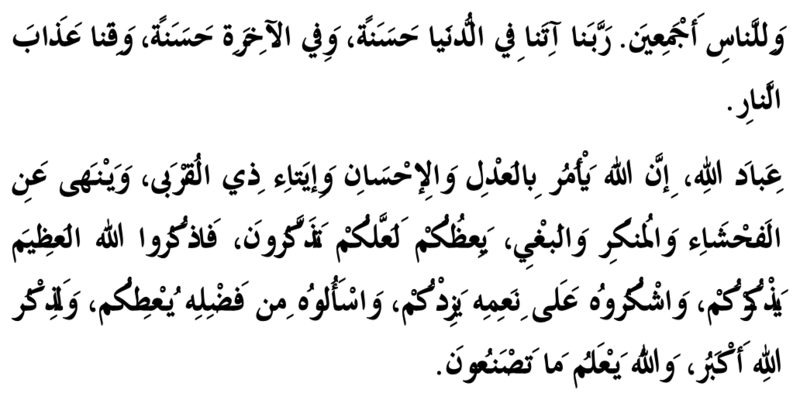
Therefore, let us make this month of Syawal a means to expand our acts of ihsan and increase our rewards, guided by the etiquette and character taught by our religion. May Allah s.w.t. bless us, our families, and our whole community. Amin ya Rabbal ‘Alamin.

Second Sermon