


Islamic Religious Council of Singapore
Aidilfitri Sermon
21 March 2026 / 1 Syawal 1447H
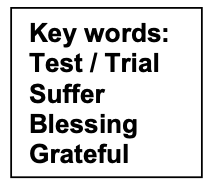
Worldly Life: A Test for Mankind
My dear brothers and sisters rahimakumullah,
On this blessed morning, we gather to celebrate our success in strengthening our taqwa of Allah through acts of worship throughout the month of Ramadan. We are grateful to Allah s.w.t. for the many blessings He has bestowed upon us, especially the blessing of faith (iman), which has been renewed once again through Allah’s mercy and love during Ramadan.
Alhamdulillah! We have witnessed our mosques enlivened and filled with congregants from all walks of life – young and old, men and women – many striving to attain the mercy of Allah s.w.t. Our media platforms have been enriched with religious content. Our relationship with the Quran has felt close once again, and its recitation and reflections have revived our hearts and senses.
We have expressed togetherness by preparing and sharing meals for iftar, reaching out to those in need, and extending our charity and contributions. We have also witnessed the enthusiasm of our youth to be involved – instilling optimism that the spirit of iman continues to flourish in our society. And by Allah’s will, may it be preserved for generations to come.

Dear blessed congregation,
Our success in completing the acts of worship during the month of Ramadan did not depend solely on our own efforts. Rather, it is by the mercy and love of Allah s.w.t. upon all His servants. Did Rasulullah s.a.w. not say, in a hadith narrated by Imam al-Bukhari and Muslim, that no one will enter Paradise because of their deeds alone, except by the vast mercy of Allah s.w.t.?
So let us, on this blessed morning, reflect upon the signs of Allah’s mercy and love for us. Reflect on every blessing that Allah has granted us, even without us asking for it. Allah s.w.t. has blessed us with the gift of faith and Islam. Allah s.w.t. has granted us strength, time, provision, and so much more. Allah s.w.t. has also bestowed upon us peace and well-being, so that we may live our religion with sincerity and dedication.
All of these are proofs of Allah’s mercy and love. He has bestowed upon us countless blessings. So then, how can we reflect true piety and gratitude for all these blessings?
Beloved congregation,
Everything that Allah s.w.t. has decreed in a person’s life – our lifespan, our provision, our faith – is both a test and a responsibility upon us. We were created by Allah to be tested, and our whole life is a test. As Allah says in Surah Al-Mulk, verse 2:
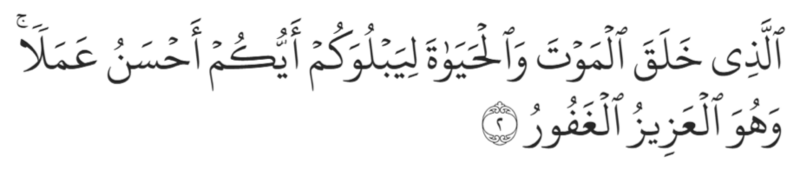
Which means: “(He is the One) who created death and life to test which of you is best in deeds, and He is the Almighty, the Most Forgiving.”

Dear blessed congregation,
This morning, allow me to share two lessons regarding the trials of life, so that we may understand and face them in ways that are pleasing to Allah s.w.t.
First: Each person is tested in different ways
Indeed, dear brothers and sisters, in recent times, we have witnessed that among Muslim communities around the world, there are those who observe Ramadan in an atmosphere of tension and fear. What is usually a time of joy and peace has turned into one of gloom and seclusion.
We certainly empathise with the trials they are facing. We pray that Allah s.w.t. protects the innocent and restores peace. We also remain steadfast in our belief in Allah’s decree, trusting that there is wisdom behind every occurrence.
However, just as hardship and suffering are tests, blessings and ease are also tests. Yes, some people are tested with hardship and deprivation. However, just because we do not face similar hardships, we must not think that Allah is not testing us. On the contrary, if we live in a state of ease and comfort, every blessing we enjoy is also a form of test from Allah s.w.t.
Let us not be deceived into thinking that the blessings and comforts we have signify our honour in the sight of Allah s.w.t.
What determines a person’s rank before Allah, whether their life is full of ease or hardship, is the level of taqwa or piety instilled in the heart. Allah s.w.t. says in Surah Al-Hujurat, verse 13:
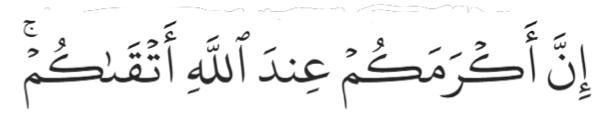
Which means: “Indeed, the most noble of you in the sight of Allah is the most righteous of you.”
Brothers and sisters, alhamdulillah, we are a community that has been blessed abundantly by Allah s.w.t. While others around the world face suffering and hardship, we continue to live under the shelter of peace and well-being by Allah’s permission. We still enjoy financial stability. We have sufficient provisions and necessities. We can still think about and plan for our future.
Educational levels continue to rise, and we are able to practice our religion without fear for our safety. All of these are great blessings, and at the same time, tests for us, for which we will be held accountable.
At times, it is not hardship that weakens faith, but comfort that easily distracts. It is not neediness that drives us away from Allah, but the feeling of contentment that makes us forget Him.
Therefore, let us reflect: What should we do with all the blessings Allah has bestowed upon us? How can we reflect piety and gratitude, while also honouring the trusts that Allah has given us? Especially after experiencing the school of Ramadan, we must continue to self-reflect and ask: What are the noble values we embraced in Ramadan which we must continue to uphold in managing the blessings and tests from Allah?

Dear brothers and sisters,
This brings us to the second lesson: Our reaction to trials determines our success
The Prophet s.a.w. said that which means: “How wonderful is the affair of the believer! All of his affairs are good for him. If something good happens, he is grateful, and that is good for him. If he faces adversity, he is patient, and that is also good for him.” (Muslim)
This hadith emphasises the response of a believer when facing both forms of tests – whether when receiving good news and blessings, or when struck by trials and misfortunes.
When confronted with a test, a Muslim does not give up, despair, or become overly anxious in times of trial. He maintains his relationships, seeks to improve circumstances, and continues to spread ihsan – goodness. He places his trust in Allah, seeks His help, and continues to strive and prepare for the future.
Allah s.w.t. says in Surah Al-Baqarah, verse 155:

Which means: “We will surely test you with something of fear and hunger, and loss of wealth, lives, and fruits – but give glad tidings to the patient.”
This verse highlights that the reaction expected from a believer in the face of trials is to be patient. A believer does not view trials as a failure. Rather, they are seen as an opportunity to attain reward from Allah s.w.t. It all depends on how we respond when faced with a challenge. This determines the true success of a believer who faces trials and hardships.

Dear fellow Muslims,
As Muslims living in better circumstances compared to some of our brothers and sisters in other countries, it is our duty to receive Allah s.w.t.’s blessings with gratitude. Scholars explain that gratitude for our blessings is not merely uttered through our words. Consider the following explanation:
First, gratitude must arise from a heart that is certain and convinced that every provision and blessing comes from Allah. To Him alone we direct our prayers and hopes.
Second, gratitude must be expressed with the tongue. By saying ‘alhamdulillah’, we acknowledge the Giver, that is Allah, and seek His blessings in our provision.
Third, gratitude must be reflected in our actions. Every favour we receive is a trust from Allah. We will be held accountable for every blessing we possess. What do we do with the blessings of security, well-being, freedom, education, sustenance, and income that Allah has given us?
Beloved brothers and sisters,
The sermon wishes to remind us once again to continue performing good deeds and preserving noble values such as rahmah – mercy and ihsan – compassion, extending beyond Ramadan, as a sign of our gratitude to Allah s.w.t. Allah says in Surah Saba’, verse 13:
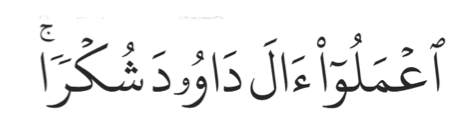
Which means: “Do good, O family of Dawud, in gratitude.”
Fellow Muslims,
Let us use all the blessings that Allah has bestowed upon us as a sign of our gratitude, by continuing to do good and drawing closer to Him.
Let us rejoice today, as taught by the Messenger of Allah s.a.w. Yet in this joy, let us not forget that every blessing we enjoy is also a test. Let every blessing we receive be a means for us to be more humble, more generous, and to spread ihsan.
May Allah preserve peace and well-being, grant us strength and tranquillity, and accept all the deeds we have put forth.
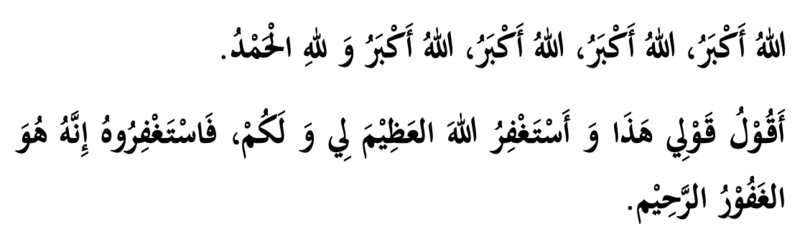
Second Sermon