


Muhammad s.a.w: The Prophet who wept in the night
| Sections: Introduction | Gratitude (syukur) in the night | Graciousness (ihsan) in solitude | Giving (sadaqah) through dua | Getting up in the last third of the night | Closing |
Introduction
If we were to walk with Prophet Muhammad s.a.w. through the night where the atmosphere was still and the world hushed, what would we find? Where will our hearts be? How would it soak in the quiet moments with the beloved s.a.w?
When the Prophet s.a.w. was still walking this earth, and the bustling land slowed down as the final sounds of the day started to fade, it set the ambience for him to rise. Not out of restlessness, but out of longing for his Creator. Homes around him fell quiet, and even his fellow companions were resting their weary bodies to recharge for the next sunrise. Yet, in the stillness and darkness of the night, tears traced their way down his face.

Al-Mughirah ibn Shu’bah reported that the Prophet s.a.w. would pray until his feet were swollen. It was said to him, “Why do you do this when Allah s.w.t. has forgiven your past and future sins?” The Prophet s.a.w. said,
أَفَلَا أَكُونُ عَبْدًا شَكُورًا
“Shall I not be a grateful servant?”
(Sahih Al-Bukhari and Muslim)
When asked why he worshipped so deeply, the Prophet Muhammad s.a.w.'s answer touches our hearts till today. He s.a.w. would stand before Allah s.w.t. for so long that his feet would swell. It was not because of the weight of burden nor fear, but it was purely presence and love expressed through endurance. His tears were a testimony to the heart’s language when overwhelmed by gratitude.
In both moments of ease and hardship, his thankfulness towards Allah s.w.t. remained. The kind that was felt in the heart, uttered upon the tongue and evidently radiated through his limbs. Every aspect of his response was a reflection of the kind of servant he was known for by those on the land and many more in the skies. This was the state of his soul, weaving through the stillness of the night. In his continued worship, gratitude was not only spoken but lived.
This Ramadan, how best can our hearts embody this sense of humility?
Gratitude (syukur) in the night
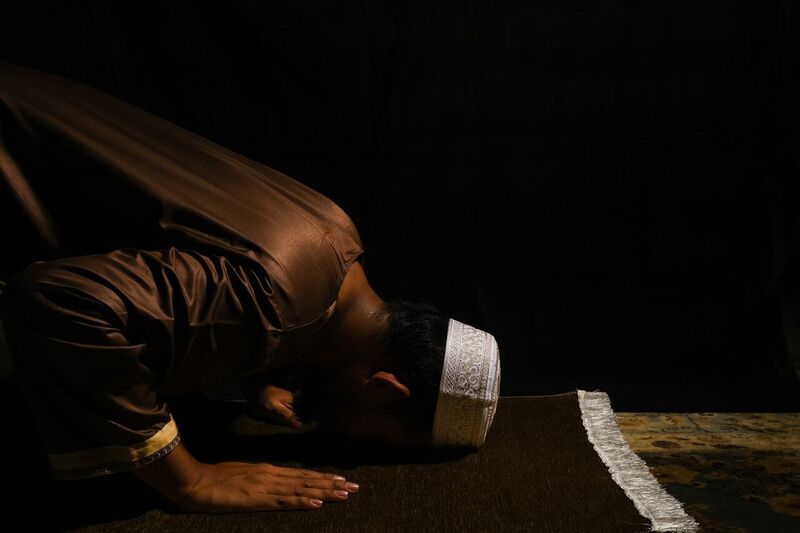
As we naturally catch a breath in moments of ease and whisper our thanks to Allah s.w.t, the Prophet s.a.w. would not only thank Him for ease. He thanked Allah s.w.t. for the responsibility gifted to him, for the honour of prophethood, for the weight of justice, and for an ummah (nation) he would never fully meet, yet carried constantly in his heart.
Anas ibn Malik reported that the Prophet s.a.w. expressed his desire to meet his ikhwan (brothers). The companions of the Prophet queried whether they were not his ikhwan. The Prophet s.a.w. said,
أَنْتُمْ أَصْحَابِي وَإِخْوَانِي الَّذِينَ لَمْ يَأْتُوا بَعْدُ
“You are my Companions. My brothers are those who have not come yet.”
(Sunan An-Nasa'i)
The gratitude of the Prophet s.a.w. was not merely for what Allah s.w.t. had given him, it was also for whom He had entrusted to him. The gratitude he expressed as he stood in prayer was proof that his journey of prophethood was not a personal honour, but a trust meant to uplift others. Even in solitude, his heart turned outward in gratitude. Gratefulness for Allah s.w.t’s will and decree, choosing him to intercede, to teach, to plead for forgiveness on behalf of his ummah.
His nights remind us that true gratitude is not an act where we turn to Allah s.w.t. most urgently only when we are afraid, broken, lost or desperate. Gratitude also appears even when the waves of life seem to be settled, even when prayers are seen to be answered, even when we reach a point where we feel that we have done enough.
Abu Umamah reported that the Prophet s.a.w. said,
عَلَيْكُمْ بِقِيَامِ اللَّيْلِ فَإِنَّهُ دَأَبُ الصَّالِحِينَ قَبْلَكُمْ وَهُوَ قُرْبَةٌ إِلَى رَبِّكُمْ وَمَكْفَرَةٌ لِلسَّيِّئَاتِ وَمَنْهَاةٌ لِلْإِثْمِ
“Make a practice of performing the night prayer for it is the habit of the righteous who came before you, it brings you closer to your Lord, it expiates your evil deeds and prevents you from sinning.”
(Sunan at-Tirmidhi)
Gratitude does not end with the journey of the self. It continues to flow into moments of Tahajjud (night prayer), in showing up not perfectly but honestly, seeking forgiveness from Allah s.w.t. It is also in the way we nurture hope in our hearts, seeking His pleasure and love in every form of worship as proof of our thankfulness to the Creator.
This Ramadan, how can we pursue true gratitude not just after receiving a blessing, but also when no one is watching at night?
Read: How to pray Tahajjud and perform Qiyamullail
Graciousness (ihsan) in solitude
It is especially in the night when quietness reminds us that there are no eyes to impress, no voice to affirm us, no worldly role to play. The spotlight is only on the relationship between the servant and Allah s.w.t. And it was here, within the space that is unseen by the world, that the Prophet s.a.w. continued to perfect his faith and worship with ihsan (graciousness).
‘Umar ibn Al-Khattab reported that the Prophet s.a.w. was asked about ihsan. He s.a.w. said,
أَنْ تَعْبُدَ اللَّهَ كَأَنَّكَ تَرَاهُ فَإِنْ لَمْ تَكُنْ تَرَاهُ فَإِنَّهُ يَرَاكَ
“(Ihsan is) to worship Allah as if you see Him, for although you do not see Him yet He certainly sees you.”
(Sahih Al-Bukhari)
While the audience throughout the days and nights changed, his character remained. His excellence in all the ways that he served was consistent because it was sincere. Even in moments of solitude when he prayed, he recited every verse with care. His bowing was done with presence. He basked in sujud (prostration) without rushing, being distracted orcalculating time. His worship reflected ihsan.
Embracing moments of the night with ihsan reshapes the heart from within. No longer negotiating outcomes nor depending on measured efforts, the heart simply becomes present. Ihsan, especially when in solitude, purifies intentions, steadies the heart, and restores peace that can never be manufactured by humankind as it is gifted from Allah s.w.t.
Allah s.w.t. mentions in the Quran,
وَمَنْ أَحْسَنُ دِينًا مِّمَّنْ أَسْلَمَ وَجْهَهُ لِلَّهِ وَهُوَ مُحْسِنٌ وَاتَّبَعَ مِلَّةَ إِبْرَاهِيمَ حَنِيفًا ۗ وَاتَّخَذَ اللَّهُ إِبْرَاهِيمَ خَلِيلًا
“And who is better in faith than those who (fully) submit themselves to Allah, do good, and follow the way of Ibrahim, the upright? Allah chose Ibrahim as a close friend.”
(Surah An-Nisa’, 4:125)
In a world that rewards loudness and visibility, the Prophet s.a.w. taught us that the most transformative acts often happen quietly. It is in the unseen moments that our faith in Allah s.w.t. deepens. The prayers offered that no one knows. The tears that are shed without sound or explanation. The duas whispered because they felt too heavy to utter and express with words.
This Ramadan, which of our deeds will we keep as private devotion? Ones that are quieter, yet more beautiful than our public acts.
Read: The virtue of ihsan in the life of a Muslim
Giving (sadaqah) through dua
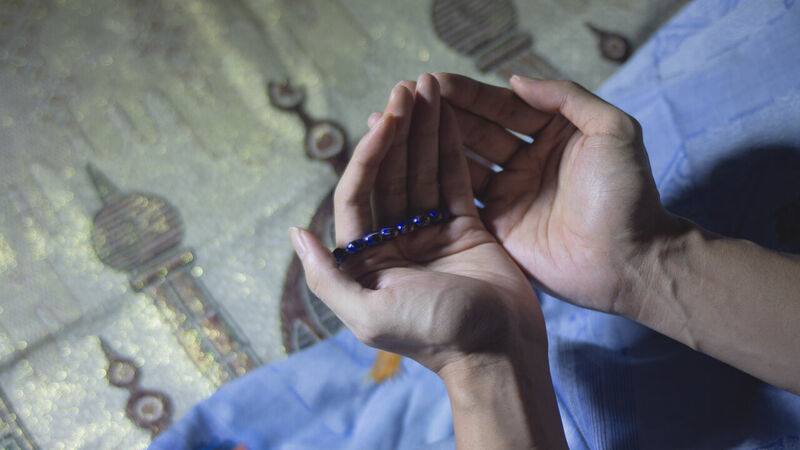
Never once did the Prophet s.a.w. spend his nights thinking only about himself. Even in the darkness of the night, when many of the inhabitants of the world were asleep, he gave through dua (supplication). This is a generosity where its effects go beyond any material matter. It is the kind of giving that comes from a heart that cares. He gave with his concern, his tears and his time.
‘Awf ibn Malik al-Ashja’i reported that he stood in prayer one night with the Prophet s.a.w. He stood up and recited Surah Al-Baqarah. Whenever he came across a verse mentioning mercy, he stopped and asked Allah s.w.t. for mercy; and whenever he came across a verse mentioning punishment, he stopped and sought refuge with Allah s.w.t. from it. Then he bowed and paused as long as he had stood, and said while bowing,
سُبحانَ ذي الجَبَروتِ والملَكوتِ والكِبرياءِ والعَظَمةِ
“Glory be to the Possessor of greatness, dominion, grandeur, and majesty.”
(Sunan Abu Dawud)
These supplications of mercy and protection were not limited to himself. The Prophet s.a.w. also included concern for his ummah, remembering those whom he loved in moments of vulnerability as he stood in front of Allah s.w.t. He continued to weep and supplicate for people of his ummah, those separated from him by centuries, languages and lives. He kept asking Allah s.w.t. to forgive them, to guide them, to be gentle with them.
Through his best example, we are invited to give even in the darkest of nights. To remember those who might be struggling, unseen and unheard. To ask Allah s.w.t. to bless our parents, children, communities, and those whose names we do not know but whose pain and whispers are known to Him. Dua is a form of sadaqah (charity) that does not require us to remove anything from what we have yet its weight is heavier than we can possibly imagine. For in giving to others, it is a form of release for our own hearts.
This Ramadan, can we treat dua for others as a form of sadaqah that is offered generously and sincerely?
Read: 3 good deeds with unlimited rewards
Getting up in the last third of the night
Every night as we indulge in slumber, there is a moment when Allah s.w.t. is closest. It is a time that the Prophet s.a.w. continued to seize each night without fail. He treated this time as an honourable appointment, night after night, year after year. After a long day of striving and serving, the heart seeks to be revived, replenished and rejuvenated. The tears need space to flow and the mind searches for clarity that the world can never provide.
‘Amr ibn ‘Abasah reported that the Prophet s.a.w. said,
أَقْرَبُ مَا يَكُونُ الرَّبُّ مِنْ الْعَبْدِ فِي جَوْفِ اللَّيْلِ الْآخِرِ فَإِنْ اسْتَطَعْتَ أَنْ تَكُونَ مِمَّنْ يَذْكُرُ اللَّهَ فِي تِلْكَ السَّاعَةِ فَكُنْ
“The closest the servant is to the Lord is during the last depth of the night. If you can be among those who remember Allah in this moment, then do so.”
(Sunan At-Tirmidhi)
The Prophet s.a.w, the one who embodied goodness in every word and action, encouraged the remembrance of Allah s.w.t. in the night. Through this remembrance, one is guided back to hope when worries feel heavier than words, in a manner that is no longer rushed nor distracted. It is also a time when Allah s.w.t. personally calls upon His servants, one that even soothed the heart and tears of the Prophet s.a.w.
Abu Hurairah reported that the Prophet s.a.w. said,
يَنْزِلُ رَبُّنَا تَبَارَكَ وَتَعَالَى كُلَّ لَيْلَةٍ إِلَى السَّمَاءِ الدُّنْيَا حِينَ يَبْقَى ثُلُثُ اللَّيْلِ الآخِرُ يَقُولُ مَنْ يَدْعُونِي فَأَسْتَجِيبَ لَهُ مَنْ يَسْأَلُنِي فَأُعْطِيَهُ مَنْ يَسْتَغْفِرُنِي فَأَغْفِرَ لَهُ
“Our Lord Almighty descends to the lowest heaven in the last third of every night, saying: Who is calling upon Me that I may answer him? Who is asking from Me that I may give him? Who is seeking My forgiveness that I may forgive him?”
(Sahih Al-Bukhari and Muslim)
For this reason, especially in the last ten nights of Ramadan, the Prophet s.a.w. intensified his worship to Allah s.w.t. He recognised that when he leaned fully into the night, it was a time where he could spend with Allah s.w.t, seeking His love and pleasure. For the rest of us, we might not have the same capacity as the Prophet s.a.w. to rise every single night. However, we can choose one amongst the many nights. We can choose a few minutes of stillness to remember Allah s.w.t. We can choose showing up and being present over perfection.
This Ramadan, what are we willing to set aside so that our hearts can meet Allah s.w.t. in the moments He draws nearest?
Closing
Think about this. If the Prophet s.a.w. who is forgiven, chosen and beloved wept in gratitude in the night, what about us?
This Ramadan, let us tread gently through the night. As we stand in worship, even briefly, let our acts of thankfulness radiate from the heart, be uttered by the tongue and be translated through actions. Let us beautify our private worship and make it sincere, in the way the Prophet s.a.w. did. Let us give through dua and let our tears witness our illuminating nights.
May our hearts be drawn closer to Allah s.w.t. who awaits His servants each night and to the Prophet s.a.w. who wept for us when the world was asleep.
Articles on MuslimSG may be reproduced electronically or in print with prior permission from MuslimSG. Proper credit must be given to the author(s) and MuslimSG.