


Is caviar halal?
The basics of caviar and its halal status
Traditional caviar comes from a family of large, ancient freshwater and saltwater fish known as sturgeon. While there are both black and red caviar, traditional black caviar is harvested from sturgeon fish, whereas red caviar is primarily sourced from salmon. Fish eggs are generally considered halal across the four Islamic jurisprudential schools of thought (Shafi’i, Maliki, Hanbali and Hanafi), which hold that fish - and by extension their eggs (i.e. roe, caviar) – are permissible to eat, as long as the fish itself is an acceptable species for that specific school of thought.
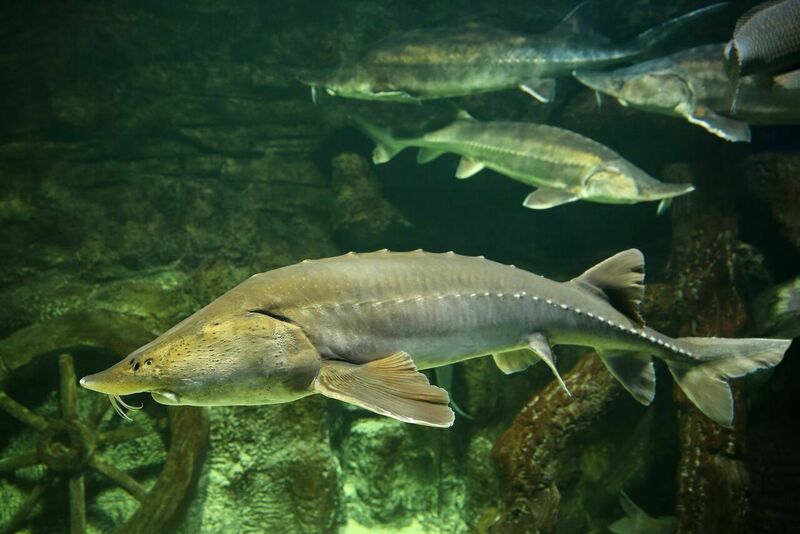 Sturgeon Fish
Within the Hanafi school of thought, a fish that dies on its own (samak at-tafi) – without being caught or killed by an external cause – and floats to the water’s surface is considered impermissible to eat. From here, we can derive that the eggs of such a fish, including its caviar, would also be impermissible. That said, this is a minority position; the majority opinion across the other schools of thought holds that fish and their eggs are halal regardless of how the fish died.
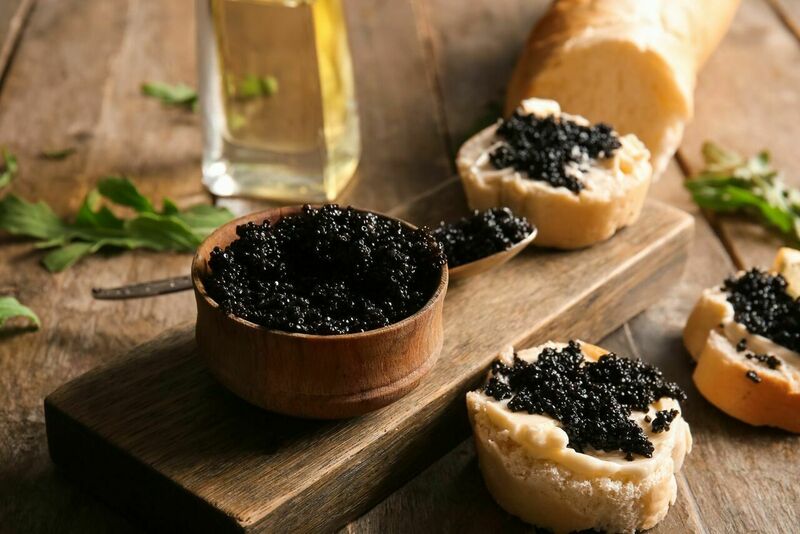
What to look out for when buying caviar
Concerns about halal status arise when the caviar involves prohibited or questionable additives, emulsifiers, colourings, flavourings, or any other non-halal substances in its processing or production. This applies to imitation caviar products as well, which attempt to replicate the taste and texture of natural caviar. It is therefore essential to check ingredient labels carefully and look out for valid halal certification logos, just as we would with any other processed food.
When in doubt about its halal status, let the caviar go, abiding by the hadith of our Prophet s.a.w:
دَعْ مَا يَرِيبُكَ إِلَى مَا لاَ يَرِيبُكَ فَإِنَّ الصِّدْقَ طُمَأْنِينَةٌ وَإِنَّ الْكَذِبَ رِيبَةٌ
“Leave what makes you in doubt for what does not make you in doubt. The truth brings tranquillity while falsehood sows doubt.”
(Jami’ At-Tirmidhi: 2518)
Conclusion
Beyond halal, it is also essential to seek what is tayyib (good). Food that is tayyib can be understood as pure (clean), wholesome (nutritious), and ethically sourced.
Read: Halalan Tayyiban: More than just halal
When deciding to buy caviar, let your purchasing power reflect your role as a khalifah (steward or vicegerent) of the Earth by doing your best to select from certified and reputable caviar producers.
If that is not viable, seeking a caviar alternative may be a better and more Islamically ethical option. Today, with many sturgeon species facing declining populations due to overfishing and habitat loss, it is worth exploring alternatives that are sustainable, ethically sourced, and legally obtained. In doing so, in sya Allah, we are making an active effort to abide by the Prophet’s s.a.w. call for excellence (ihsan) and compassion (rahmah) towards Allah’s s.w.t. creation, rather than being complicit in the destruction of nature and its inhabitants.
On animal welfare and the concept of iḥsan, read about ‘Is foie gras halal?’
Ultimately, can we truly feel satiated and fulfilled if the food we consume is produced by entities that focus solely on maximising revenue, with little to no regard for the well-being of marine life and ethical principles in general?
Allah s.w.t. reminds us in the Quran:
...وَلَا تُفْسِدُوا فِي الْأَرْضِ بَعْدَ إِصْلَاحِهَا
“Do not spread corruption in the land after it has been set in order...”
(Surah Al-A’raf, 7:56)
As Muslims, we are highly encouraged to make conscious, considered and conscientious decisions about what we eat, beyond ensuring its halal status. So, the next time you find yourself about to purchase a tin of caviar – wallet permitting – make it not just a treat for the palate, but a mindful and wholesome decision.
And Allah s.w.t. knows best.
References
1. Ibn Rushd. Bidāyat al-Mujtahid wa Nihāyat al-Muqtaṣid. Beirut: Dār Ibn Ḥazm. 1995. 2:899-901.
2. https://beleaev.com/blogs/news/red-caviar-vs-black-caviar-everything-you-need-to-know
3. https://seekersguidance.org/answers/hanafi-fiqh/what-animals-are-halal-and-haram-to-eat-in-the-hanafi-school/
4. https://wwf.panda.org/discover/our_focus/freshwater_practice/freshwater_inititiaves/sturgeon_initiative
5. Lambert, H. and Emam, W. (2024). Dying for a canape: the welfare implications associated with both traditional and "ethical" production of caviar from sturgeon. Frontiers in Animal Science, 5, 1432765. https://doi.org/10.3389/fanim.2024.1432765
Articles on MuslimSG may be reproduced electronically or in print with prior permission from MuslimSG. Proper credit must be given to the author(s) and MuslimSG.