


Ihsan and amanah: The collective impact of Zakat
| Sections: What happens to our Zakat after we give it? | Looking beyond ourselves | From ihsan to amanah | When ihsan and amanah come together | What kind of community are we building? |
In brief:
Zakat is one of the five pillars of Islam and an important act of worship that reflects the values of ihsan (excellence and compassion) and amanah (trust and responsibility). Beyond fulfilling an individual obligation, zakat brings the community together to support those in need.
- Zakat is obligatory for eligible Muslims to purify wealth and help those in need.
- Zakat promotes compassion, trust and responsibility in caring for others.
-
Zakat strengthens the community by easing hardship and supporting eligible beneficiaries.
When we fulfil our Zakat, we often experience it as something deeply personal.
We calculate what is due from our wealth, ensure that we meet the necessary conditions, and give what Allah has obligated us to give. In doing so, we hope to fulfil this obligation and seek His pleasure and reward. Allah s.w.t. says,
خُذْ مِنْ أَمْوَالِهِمْ صَدَقَةً تُطَهِّرُهُمْ وَتُزَكِّيهِم بِهَا وَصَلِّ عَلَيْهِمْ ۖ إِنَّ صَلَاتَكَ سَكَنٌ لَّهُمْ ۗ وَاللَّهُ سَمِيعٌ عَلِيمٌ
“Take from their wealth (O Prophet) charity to purify and bless them, and pray for them—surely your prayer is a source of comfort for them. And Allah is All-Hearing, All-Knowing.”
(Surah At-Tawbah, 9:103)
Zakat purifies our wealth and reminds us that what Allah has blessed us with is an amanah. The wealth Allah has entrusted to us is not merely something we possess. It is also a responsibility. How we use it, and whether we remember those who have less than us, are part of how we honour that trust.
It is also important to remember that Zakat on wealth (Zakat harta) is not limited to Ramadan and can be fulfilled throughout the year. When our eligible wealth reaches the nisab (minimum threshold) and fulfils the haul (holding period of one Hijri year), Zakat becomes obligatory.
There is profound wisdom in how Allah has made Zakat obligatory for those who meet its conditions. Through Zakat, our individual act of worship becomes a means of caring for others. What one person gives can help ease the difficulties faced by another.
What happens to our Zakat after we give it?
While Zakat begins with an individual fulfilling a religious obligation, its impact extends beyond the act of giving. Unlike voluntary charity, the recipients of Zakat are not left to our discretion. Allah s.w.t. has specified eight categories of eligible recipients, known as asnaf, in Surah At-Tawbah (9:60):
- Fakir: Those without sufficient means to sustain themselves.
- Miskin: Those whose means are insufficient to meet their basic needs.
- Amil: Those appointed to collect and administer Zakat.
- Muallaf: Those who have recently embraced Islam.
- Riqab: Those seeking freedom from bondage. In Singapore, this category also includes individuals requiring educational assistance.
- Gharimin: Those burdened by debt arising from basic necessities.
- Fisabilillah: Those striving in the cause of Allah for the betterment of the community, including through religious education and programmes.
- Ibnussabil: Stranded travellers on permissible journeys.
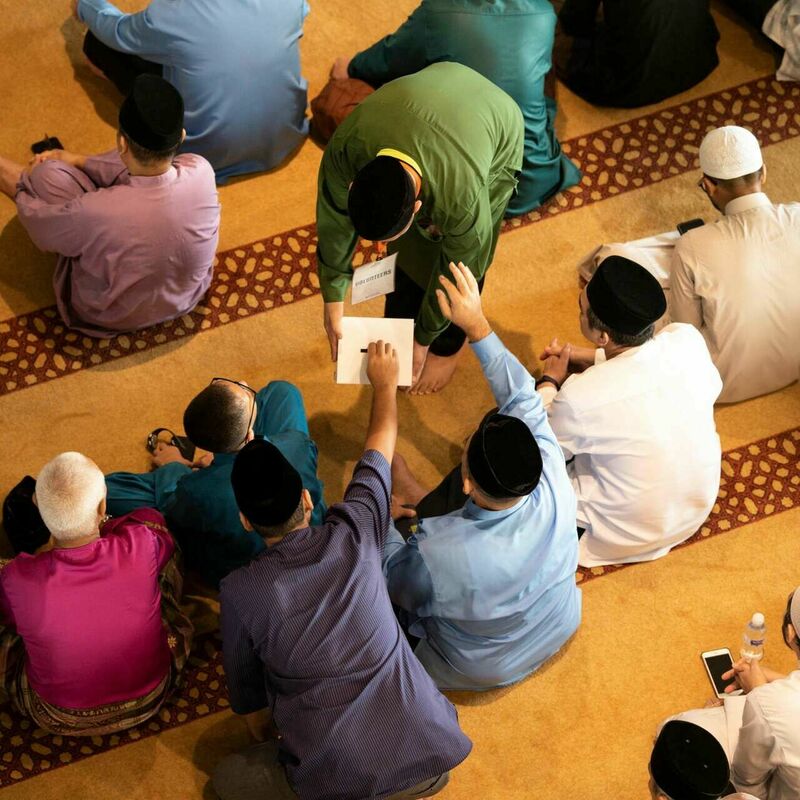
These eight categories guide how Zakat contributions are distributed to those eligible to receive them. In Singapore, Zakat supports various needs, including financial assistance for struggling families, educational assistance, religious programmes and other forms of support. Through these efforts, we see how our individual Zakat contributions, when brought together, become a meaningful source of support for others.
Looking beyond ourselves
Zakat nurtures ihsan within us.
Ihsan is often understood as excellence in our relationship with Allah and in how we conduct ourselves. One expression of ihsan is the compassion and care we extend to others, particularly those facing difficulties.
Through Zakat, we are reminded to look beyond our own circumstances and recognise the challenges faced by others in our community. We may not always realise how differently hardship affects the families around us.
Consider two households experiencing the same increase in the cost of food, transport and daily necessities. For one family, it may mean making some adjustments to their monthly budget. For another already struggling to make ends meet, it could mean having to choose between essential needs. While both families face the same rising costs, the impact on their daily lives can be very different.
What, then, does ihsan require of us when we recognise that others are facing hardship?
Our Prophet Muhammad s.a.w. described the believers in their mutual love, mercy and compassion as being like one body,
مَثَلُ الْمُؤْمِنِينَ فِي تَوَادِّهِمْ وَتَرَاحُمِهِمْ وَتَعَاطُفِهِمْ مَثَلُ الْجَسَدِ إِذَا اشْتَكَى مِنْهُ عُضْوٌ تَدَاعَى لَهُ سَائِرُ الْجَسَدِ بِالسَّهَرِ وَالْحُمَّى
“The believers are like one body in their mutual love, mercy and compassion. When one part of the body suffers, the rest of the body responds with sleeplessness and fever.”
(Sahih Muslim)
As Muslims, we are like one body, connected to one another. When one member of our community experiences hardship, their struggles should matter to us too.
This beautiful reminder teaches us that our concern for others should extend beyond our own households. While we may face different circumstances and carry different responsibilities, we remain part of one community through our shared faith. The difficulties faced by others should not be seen as theirs to bear alone.

Zakat helps turn this awareness into something tangible. Beyond simply feeling sympathy for those facing hardship, it provides a collective means of supporting those in need.
We see this in how Zakat supports members of our Muslim community in Singapore.
Recently, more than 5,600 eligible zakat beneficiary households received additional Cost-of-Living Support to help them cope with rising living expenses, on top of their existing monthly Zakat financial assistance.
For families already struggling to make ends meet, such assistance can provide much-needed relief. It may help ease the burden of household expenses and give families some breathing space as they manage their daily needs.
At times, parting with our hard-earned wealth may not be easy. Yet, when we recognise that what Allah has blessed us with can become a source of relief for others, we begin to appreciate the deeper meaning of giving.
This is one of the beautiful expressions of ihsan through Zakat. It reminds us that our blessings are not meant to benefit us alone, and that through our collective contributions, we can help ensure that those facing difficulties do not have to carry their burdens alone.
From ihsan to amanah
While ihsan nurtures the compassion we have for others, Zakat also teaches us another important value: amanah.
For every Muslim required to pay Zakat, there is an amanah to understand this religious obligation and fulfil it correctly. Those entrusted with receiving and administering Zakat carry an amanah of their own: to ensure that the funds are managed responsibly and reach those whom Allah has designated as eligible recipients.
Allah s.w.t. reminds us,
إِنَّ اللَّهَ يَأْمُرُكُمْ أَن تُؤَدُّوا الْأَمَانَاتِ إِلَىٰ أَهْلِهَا وَإِذَا حَكَمْتُم بَيْنَ النَّاسِ أَن تَحْكُمُوا بِالْعَدْلِ ۚ إِنَّ اللَّهَ نِعِمَّا يَعِظُكُم بِهِ ۗ إِنَّ اللَّهَ كَانَ سَمِيعًا بَصِيرًا
“Indeed, Allah commands you to return trusts to their rightful owners; and when you judge between people, judge with fairness. What a noble commandment from Allah to you! Surely Allah is All-Hearing, All-Seeing.”
(Surah An-Nisa’, 4:58)
Although this verse speaks broadly about fulfilling trusts and upholding justice, it also invites us to reflect on the responsibilities entrusted to us.
Zakat funds are not merely money to be distributed. They represent acts of worship fulfilled by members of the community, and they are intended for those whom Allah has given the right to receive them.
Managing these contributions therefore requires care, integrity and fairness. Beyond distributing financial assistance, it calls for understanding the changing circumstances of families, recognising where support is needed and honouring the trust placed in those administering the funds.
In Singapore, this responsibility is carried out through institutions such as the Islamic Religious Council of Singapore (MUIS), which administers Zakat to support eligible beneficiaries and address their needs. Through collective administration, Zakat resources can be directed towards families according to their circumstances, while taking into account other forms of assistance available to them.
The recent Cost-of-Living Support is one example of how this responsibility is fulfilled in practice. The additional assistance complements existing monthly Zakat financial assistance and broader national cost-of-living measures, providing further support to eligible households facing financial pressures.
This also reflects a broader understanding of care. Zakat does not operate in isolation. In Singapore, it works alongside other forms of community and national support to provide a more complete safety net for those in need. When these efforts come together, they reflect a shared commitment across religious institutions, community organisations and the wider society to ensuring that no one is left to face hardship alone.
The giver fulfils an amanah before Allah, while those entrusted with managing the contributions must honour that trust. Equally important is ensuring that recipients are treated with dignity, recognising that Zakat is a right Allah has established for eligible recipients, not merely a favour extended to them.
When ihsan and amanah come together
In Zakat, ihsan and amanah are not two separate ideas. They complement and strengthen one another.
Ihsan gives us the spirit to care, while amanah guides how we translate that care into responsible action. Both are necessary.
It is meaningful when we recognise that what Allah has blessed us with comes with a responsibility to help others. Through Zakat, we fulfil that responsibility while contributing to the well-being of the wider community.
Zakat helps bridge the gap between different segments of society, allowing wealth to benefit the wider community, particularly those facing financial difficulties.
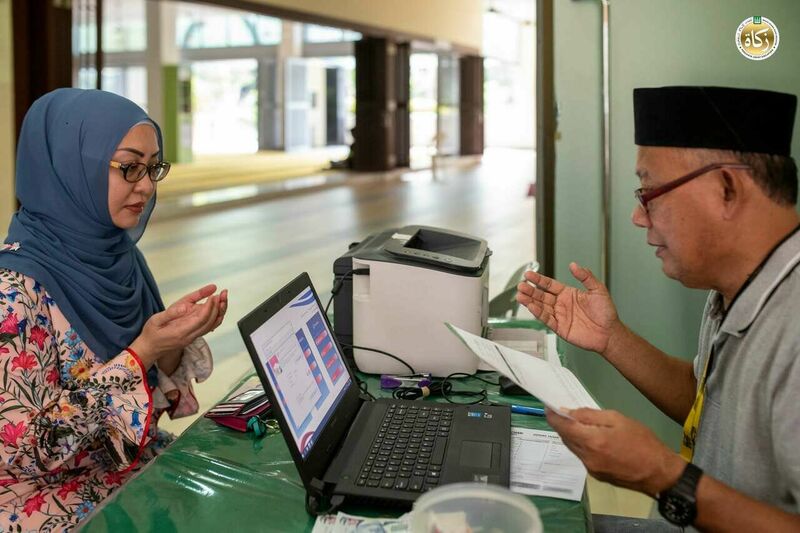
In the Quran, Allah s.w.t. reminds us of the importance of ensuring that wealth does not remain concentrated among the wealthy,
كَيْ لَا يَكُونَ دُولَةً بَيْنَ الْأَغْنِيَاءِ مِنكُمْ
“So that wealth may not merely circulate among your rich.”
(Surah Al-Hashr, 59:7)
Although this verse addresses the distribution of a particular category of wealth, it also reflects a broader principle in Islam: wealth should not circulate only among those who already possess it.
Zakat embodies this principle of social justice by ensuring that a prescribed portion of wealth reaches those who have a right to receive it. In this way, Zakat helps reduce economic inequalities and strengthens our shared responsibility towards one another.
It reminds those who have been blessed with wealth that there are responsibilities attached to that blessing, while affirming the dignity and rights of those who require assistance.
The relationship between the giver and the recipient is therefore not simply one of generosity and gratitude. Both are part of a system ordained by Allah, in which wealth becomes a means of fulfilling rights, easing hardship and strengthening the bonds within society.
Through Zakat, we fulfil our amanah before Allah while extending ihsan to others.
What kind of community are we building?
Ultimately, Zakat invites us to reflect not only on what we give, but also on the kind of community we aspire to build. A caring community is not simply one where people feel sympathy for those facing hardship. It is one where that concern is translated into meaningful support, and where the well-being of others is recognised as a shared responsibility. This is one of the deeper wisdoms of Zakat.
Prominent scholars such as Sayyid Sabiq, in his work Fiqh As-Sunnah,[1] have discussed the wider wisdoms and benefits of Zakat. Beyond the purification of wealth and the soul, Zakat helps meet the needs of others, strengthens mutual support and nurtures a society in which members care for one another. These teachings remain deeply relevant to our lives today.
We should aspire to build a community where caring for others is not limited to those with greater means, but is a shared responsibility that each of us fulfils according to our abilities. A community where those who are more fortunate remember those facing hardship, and where those in need are treated with dignity and supported towards greater stability and independence.
We may never meet the families whose burdens are eased through our Zakat. We may never know the parent who finds some relief in meeting their household’s needs, or the family that is able to face another day with greater peace of mind knowing that support is available. Yet, through Zakat, we remain connected to them.
What begins as an individual act of worship becomes part of something greater. Through our collective contributions, we care for one another, honour the trust placed in us and help ensure that those facing hardship are not forgotten.
Ultimately, the beauty of zakat lies not only in what we give, but also in what we make possible together.
| Find out how zakat supports all eight asnaf, how contributions are distributed and how you can fulfil your zakat obligations at zakat.sg. |
[1] Sayyid Sabiq, Fiqh al-Sunnah, 3rd ed. (Beirut: Dar al-Kitab al-Arabi), vol. 1, p. 327.
Download the MuslimSG app on the App Store & Google Play. Articles on MuslimSG may be reproduced electronically or in print with prior permission from MuslimSG. Proper credit must be given to the author(s) and MuslimSG.
